I remember how weird it was the first time a good friend dropped Zionist as a casual slur. I think that was the moment my history and the conflict began to collide.
You will need to know some things.
It might matter that I am Jewish. My divorced parents were as divided about intimacy as they were about God. My father was the true believer, and during visitations, I lived through the stages of his transition from secularism to Orthodox Judaism.
You might need to know I grew up in Izmir, Turkey under a quasi-democratic Islamic government, and that I was sex trafficked there.
You might need to know that at 24 I moved a continent away, and I knew no Jews and no Jews knew me. A core part of me in a box, I inhabited a world with people who believed Jews were funny, thrifty people. I heard a lot of ash tray Holocaust jokes. Good Jews are expected to be complicit in their own dehumanization and to enjoy it.
And not in all that time, the years of attending weekly services and moving through vast congregations all over the world, the time I spent as a Jew not-seen-as-a-Jew, not once did I ever have a real conversation about Zionists or meet any self-proclaimed Zionists.
“Zionists make Zionism a dirty word.” My friend replied to my Discord post, an interview of a BIPOC Jewish student at Columbia. This was so early in the conflict, before I had words to express how I was feeling, before I had lost the hope my friends would listen. The student explained that the Columbia community had always supported her as a black and native american woman, support that disappeared when they learned she was a Jew. “They have made Zionism a dirty word,” she said, “when it should be inseparable from Jewish self-determination and equal rights.” She had better words to explain why Zionism isn’t White Supremacy, and I thought this would matter to my friends. Then they responded. “Zionists make zionism a dirty word.”
My friend spoke about Zionists with such profound confidence like it was institutional knowledge: put unleaded gas in your car, hurricanes below the equator turn counter clockwise, and Zionists are Nazis.
I have known this friend for four years. Two other long time friends upvoted the comment. Three out of four white leftist friends agree, Zionists make Zionism a dirty word.
You might need to know that none of them has met a Zionist. When I asked, none of them could even name a Zionist. Though, one friend did go into some detail on Christian Zionists. I knew and they knew that those are not the Zionists that protesters mean when they shout “Death to Zionists” on the suburban streets of a Jewish neighborhood in Toronto.
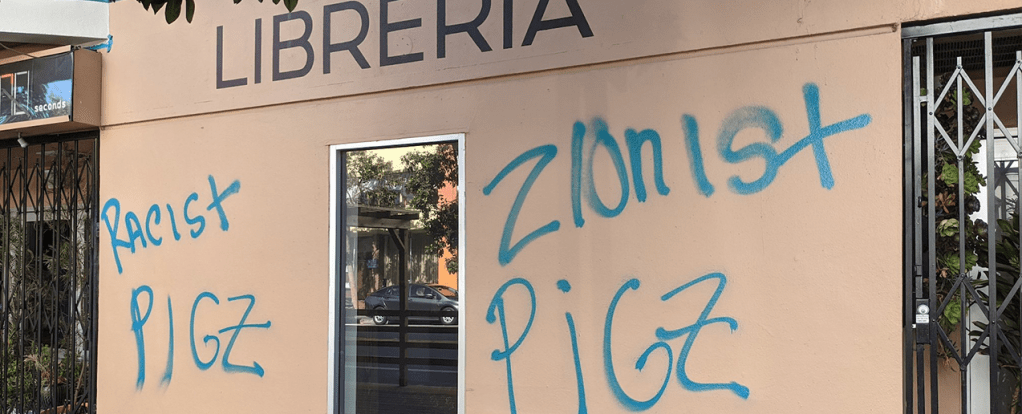
Since that first exchange with my friend, I have seen a red tide of antisemitism, as toxic as an algal bloom. Zionist propaganda! Death to Zionists! You’re lucky I’m not out killing Zionists. These are not isolated events. The video of train goers in New York asking Zionists to get out. The small group that meandered through a Jewish suburban neighborhood, faces covered but shouts clear: Baby killers! Jews around the world are being harassed, detained, assaulted, investigated without grounds, barred from designated spaces, raped, and murdered. While individuals are targets of violence, so too are Jewish communities, temples, and Jewish neighborhoods.
And at the center of it all, always the Zionists
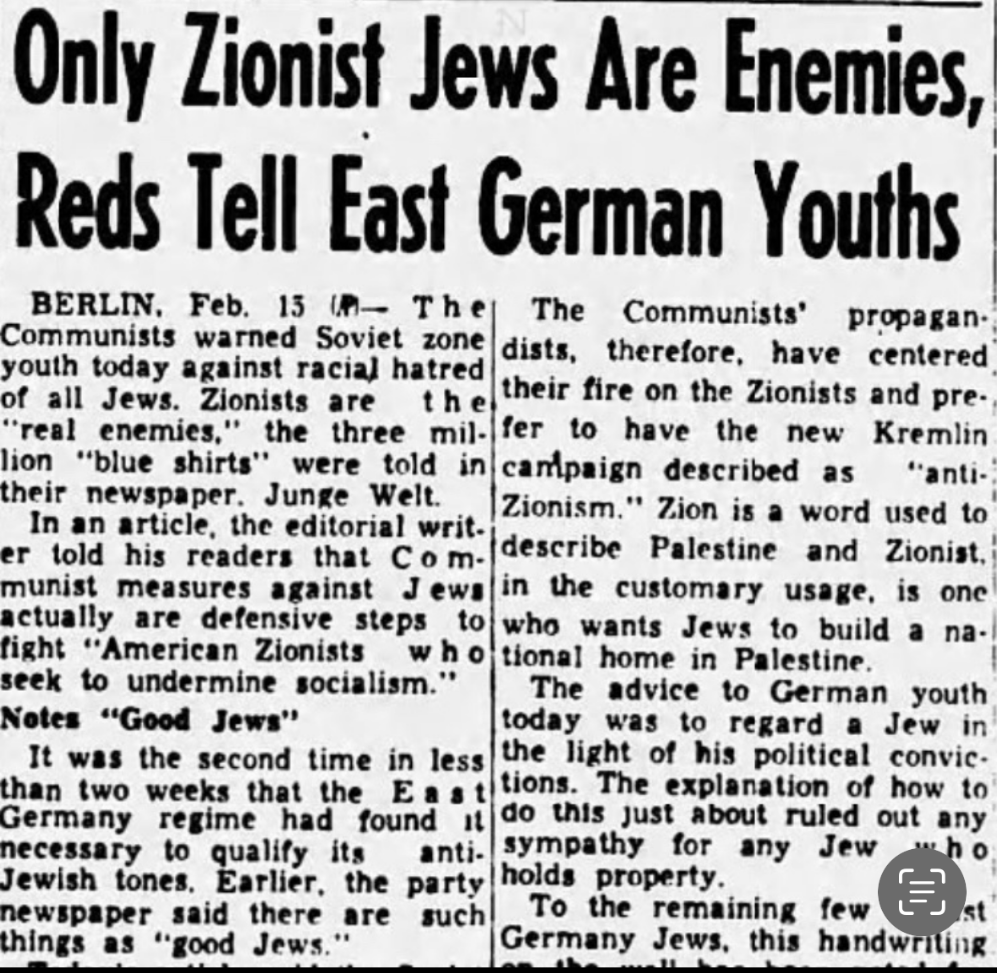
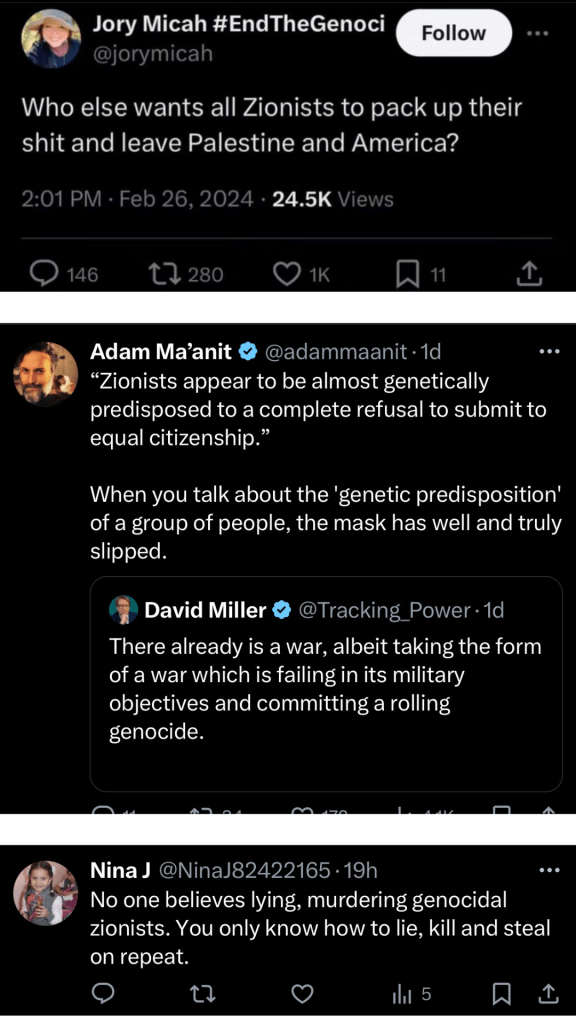
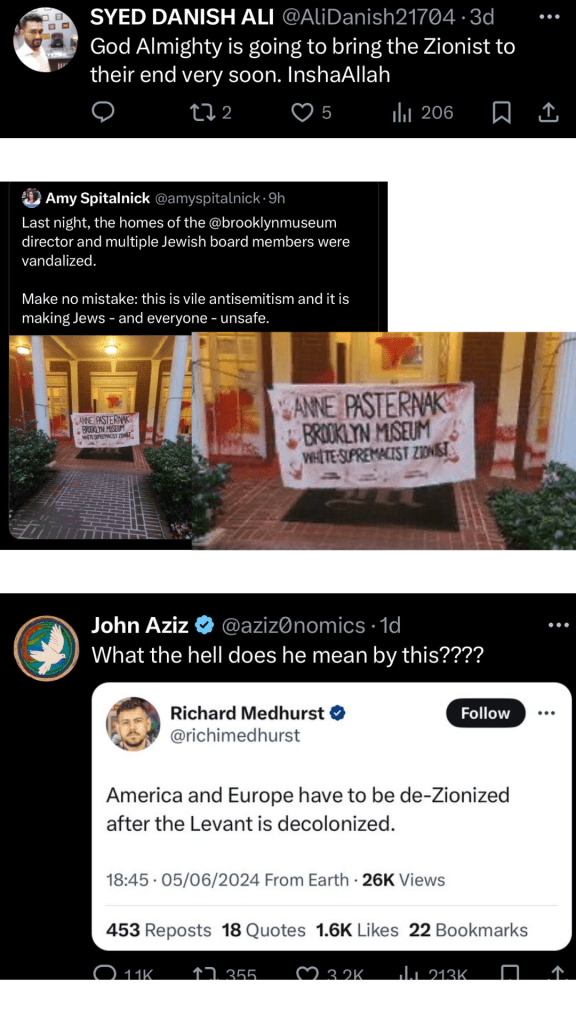
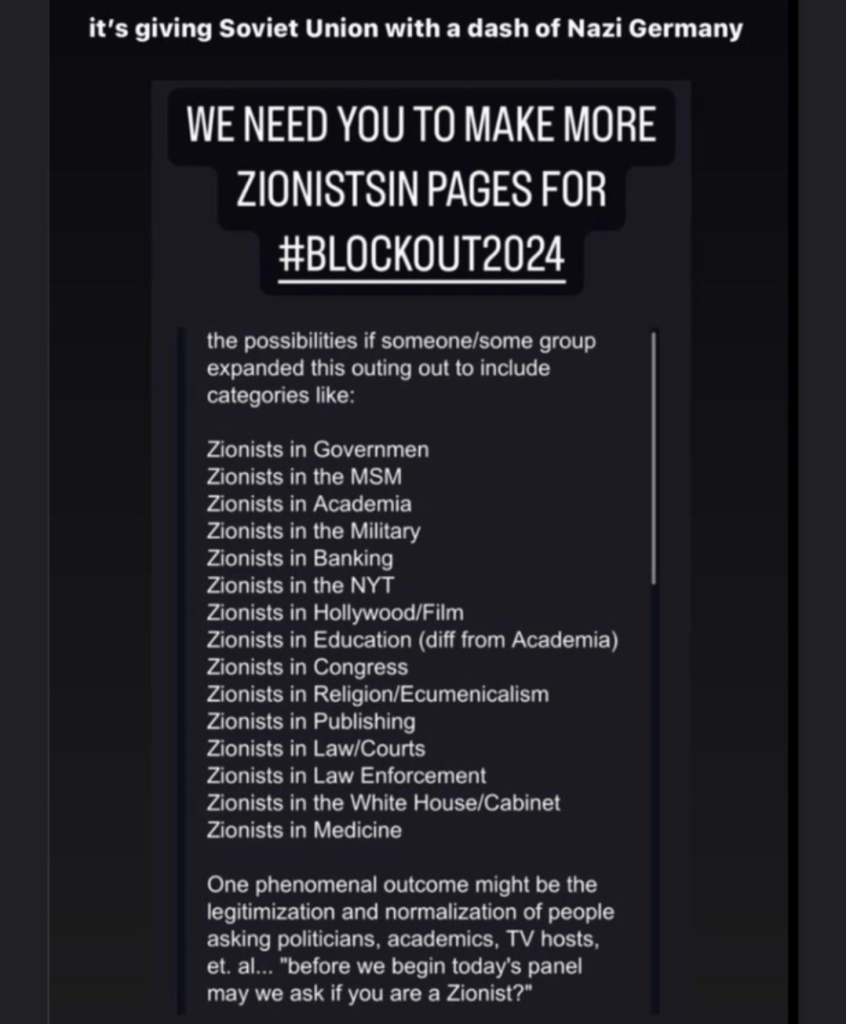
Since these people have never been involved with Jewish communities, they had no idea how not-a-discussion-topic Zionism is – at least, not in the sense these people have conjured. It was wild to hear friends tell me Jewish Zionists are white supremacists when I, a Jew, had no idea who they were talking about. I can’t begin to express how strange it is to hear people you know justifying their hate by pointing to a scapegoat they’ve largely invented themselves. In fact, these anti-semites treat Jews the way they claim Zionists treat the world. Dehumanizing a fellow minority, violence against and killing of minority, cleansing of the minority’s ethnic history and culture followed by the appropriation of the same, systemic discrimination in schools and workplaces, and the segregation of good Jew from bad, where Jews are forced to choose between exile or agreeing with antisemites in order to belong.
And I did not see it until, almost overnight, I was no longer safe or welcome in my community if I visibly engaged with my lineage.
Along with my close friends, I saw a similar viciousness against Jews and Israel in queer circles, among my native american friends, even among some other Jews. These were not extremists lurking in the cesspool of the internet. These were people living next to me who I’d pass on the way to walk my dog. These people go to work and binge watch Bear, and somewhere in between worrying about rising inflation and whether Apple is a good name for their firstborn daughter, they reserve a special place for hating Jews.
It sounded hyperbolic to me. I remembered when my grandparents were alive, I chided them for telling me to be careful, that antisemitism was still alive and well. And now all I want is for them to have been wrong, for their fears to be an exaggeration. Which is when I asked friends in my larger circle to clarify their beliefs. Of course, I had to cushion the question with qualifiers. I realize now having to do this is a red flag. I find it present in almost every instance that the larger world asks me to apologize for being Jewish, for taking up more space than I was allocated.
What do you think Zionism is? I asked. And the overwhelming response is that Zionism is a form of white supremacist ideology. This seems plausible to non-Jews, and it continues to seem so because they have not asked any Jews who do not already conform to their position.
How can an ancient urge to return home from exile be a form of white supremacy? A good question. And I found my friends had a generally approved answer: Zionism was created by a Jew in the 1900s to give Jews a reason to steal Palestinian land. They did not know that in the Passover Haggadah, written thousands of years ago, we end our ceremony with a parting wish that by this time next year, we will reunite in Jerusalem. That Zionism is not an ideology but a deep longing for a part of us that has long been exiled and stolen. My friends’ eyes glaze over when I share this. They say we can agree to disagree. They do not want to talk more about it. They hope we can put all this Jewy Zionism behind us when we get together for tapas next week.
Any time I offered facts that challenged their position, they would back off. “I don’t know that much about it,” they would hedge, “I don’t really have a personal stake.” You’d think they would feel ashamed admitting they are uninformed. I thought so. Yet after a fourth friend repeated those same lines, I realized they were using the language of social politeness to shut down the conversation. This makes any person continuing to press the topic appear either like a bully or a genocide apologist. Liars can only spin for so long, though, and when it fails, they revert to social pressures like shame, political correctness, or ostracization. When they realize you are not in the Klan, they stop talking Klan business with you.
Maybe I could have taken them more seriously if every fact they used to support their position did not turn out to be skewed or outright wrong. What do they know about Israel? What about Palestine? Almost everyone sent me the Wikipedia page on the Nakba. Look, they say, Israel ethnically cleansed the Palestinians in 1948. The first time I heard this, I felt ashamed: how had I missed this? The answer was that I hadn’t. What the article should say is that Palestinians were displaced in a war launched by five countries invading to destroy Israel. Yes, Israeli soldiers destroyed villages along the invasion path and elsewhere, but to ignore the context that this happened during war time — a war they didn’t start — is one example of how the world keeps trying to simplify this conflict. In doing so, they are actually harming the potential for a cease fire and for peace. As it stands now, the accepted perspective, as seen on Wikipedia, is Israel decided out of the blue to force Palestinians from their land. Through various mediums, antisemites are subverting historical fact to justify targeting the Jews and Israel.
I began to document the inconsistencies I found in the popular narrative versus historical fact. With every new claim, I also started tracking how language is being used to erase or change the publicly codified history of Jews. I posted everything, all of the articles and photos and books, in our community Discord server until I was posting so much content even I knew I needed a place for all of this. All of this feeling and anger and fear and hurt, and most of all, I needed a place to ask why and a place to gather and share as best I can what I am finding.
I want to answer the questions not being asked: why did the Nakba happen the day after Israeli independence? Why are there no bomb shelters in Gaza and the West Bank? Why does Egypt maintain a wall and blockade? I want to explain there is absolutely nothing Apartheid-like about Israel’s relationship with Palestine, and to argue this shows a profound lack of knowledge about what apartheid is. I want to offer a chronology and the accompanying facts that tell an undeniable story, and it is not the one calling for blood.
While this work started as a response to the call for the death of me and those like me, it has also brought unexpected allies working for peace. I engage with Gazan activists who see the propaganda for what it is. Iranians have taken to social media, pointing to the Islamic extremism whose only actual “resistance” is fighting against a unified world community. Hate is not the only point of view that can flourish, not if our hope is more visible and more voluble than theirs.
Some people jeer when I mention hope. They either have not lost enough or have lost so much they are not ready to hope again. Once you have lost and grieved it, there is no way forward but hope – not a passive emotion but a radical act. Peace is not easy, but we want to live, we want our children to live, we want the land to live. And anybody serious about these things does not call for more destruction.
I would prefer not to spend hours studying and archiving the cruelty and ugliness directed at my people. I didn’t want to discover political allies have been lying to us — that everyone around us is lazy and will believe dangerous narratives that threaten people in their community. I did not want to question everything I have heard from creators and subject matter experts now that they are using their platforms to push half truths and outright lies. I would much rather not do this. But I cannot stop. The deeper I dug to verify the claims of trusted individuals whose views I was ready to accept, the more I found how much truth they are erasing to privilege a very specific narrative, and it’s not one of peace.
What frightens me most is how so many people I know took up false claims and refused to engage with proof to the contrary. I am not seeing enough people answering the questions whose answers weren’t hard to find. Maybe I’ve missed it. But just in case, I have to do this. It’s what Judaism has taught me. It’s what activism has taught me. It’s what coming out the other side of devastation has taught me.
It’s what six years of close reading language has taught me. That’s one more thing you need to know: I spent ten years studying language in order to excavate the unspoken narrative at play. This is how I know Zionism is just a repackaging of anti-semitism, that the only group making Zionists look bad are bigots out for blood. Language reveals so much more than it hides. The truth always outs. And we need as many voices speaking truth if we want a different future.
 Snail Ask Why