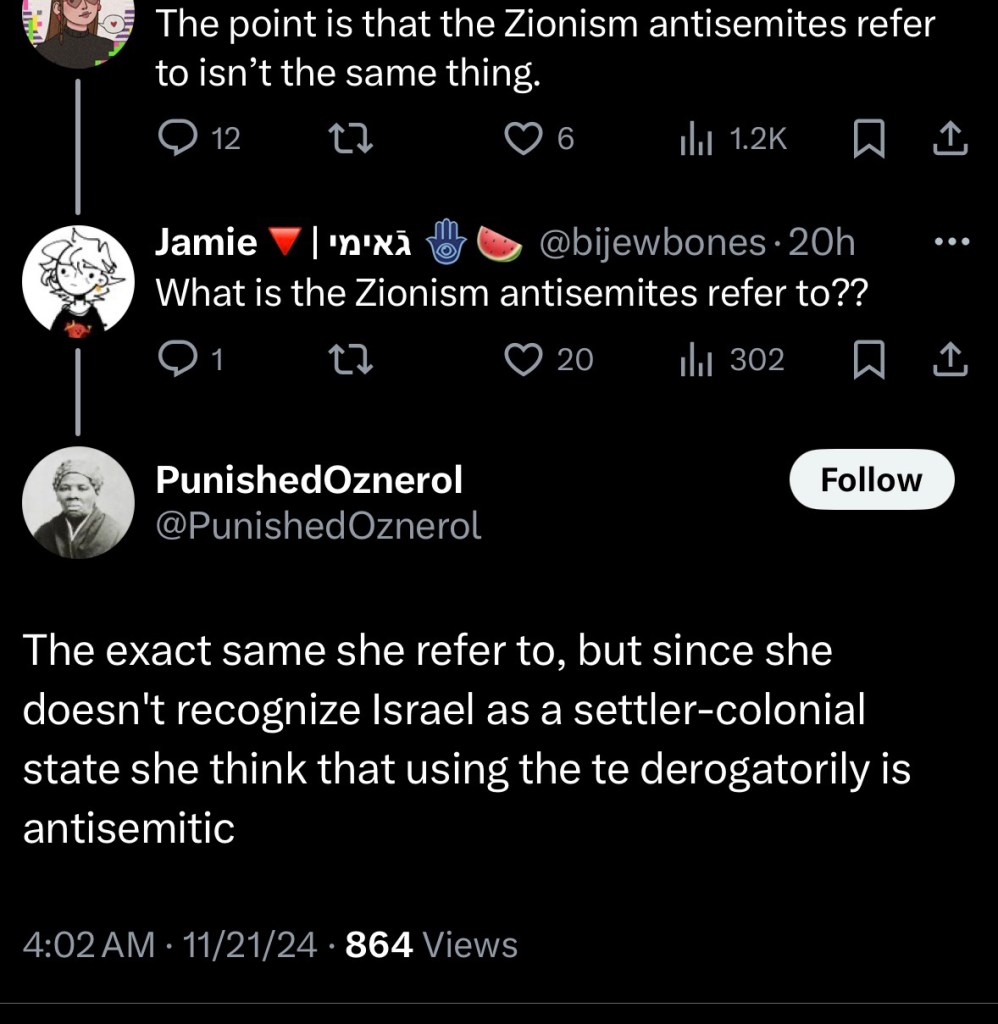
Taken from a theoretical discipline usually housed in university English departments, the term settler colonialism is often bandied about and misapplied to Israel’s formation as a country. Palestinian displacement during Israel’s founding happened due to a national conflict between two peoples claiming the same land, not imperial exploitation typical of colonialism. Let’s demonstrate why the term doesn’t fit.
1. Support ≠ Colonialism
U.S. support for Israel’s establishment doesn’t make it a colonial project. Similar to Arab nations aiding Palestinians, international alliances reflect political and regional interests, not imperial control or settler colonial frameworks.
2. Jewish Historical Presence vs. Colonial Invasion
The ancient Jewish kingdoms of Israel and Judah demonstrate a deep, indigenous connection to the land, making Zionism a return to ancestral roots rather than a colonial imposition on foreign soil.
3. Diaspora and Exile Maintains Connection
The Jewish people were forcibly exiled from their land by the Babylonians and Romans, leading to a diaspora. The longing to return to Zion has been central to Jewish identity, prayer, and culture throughout history, not a recent historical colonial aim.
4. Indigenous Status Not Colonial
By definition, indigenous peoples are those with a deep, ancestral, and cultural connection to a land, even if displaced. Jewish ties to Israel—linguistically (Hebrew), religiously, and culturally—align with this definition, not that of colonial people.
5. No Metropole
Colonialism typically involves settlers acting on behalf of a distant empire to extract resources and impose control. In the case of Israel, there was no “mother country” directing Jewish migration. Instead, Jews moved with an idealistic vision of returning home.
6. Buying Land Legally
The land acquired by early Jewish immigrants was purchased legally from Arab landowners, often at high prices. This distinguishes the process from colonial land grabs or military conquests.
7. No Exploitation of Indigenous Labor
Colonisers typically exploit indigenous populations for labor and resources. In contrast, early Zionists emphasized self-reliance, building kibbutzim (communal farms) and promoting Jewish labor.
8. Conflict Was Not Imperially Preordained
Tensions between Jews and Arabs in the land were not inherent but emerged due to conflicting national movements. Unlike colonial settlers, Jewish immigrants did not arrive with an intent to subjugate or displace.
9. Revival, Not Erasure
Unlike colonialism, Zionism didn’t erase Arab culture. Arabic remains an official language in Israel, Muslim holy sites like Al-Aqsa are protected, and cultural elements are integrated into shared public spaces.
10. Holocaust Refugees vs. Global Expansionism
Israel’s creation was seen as a moral imperative to provide a safe haven for Jews. This distinguishes it from colonialism, which is typically driven by expansionist or imperialist goals, not the survival of a persecuted people returning to their homeland.
Once you fully contextualise Jewish history, Zionism, and the establishment of Israel, it becomes clear that these events do not fit the definition of settler colonialism. Yet smug racists love using it out of context. I suppose it’s a good thing I spent a ridiculous amount of money on an advanced degree in English and theory. Maybe this is my “is there a doctor on the plane” moment, only it’s a lot less fun than those anecdotes promise.
A reminder: Deligitimizing Jewish or Palestinian connections to the homeland is a bad look. Peace is the right look. Let’s focus on that.

 Snail Ask Why
Leave a comment